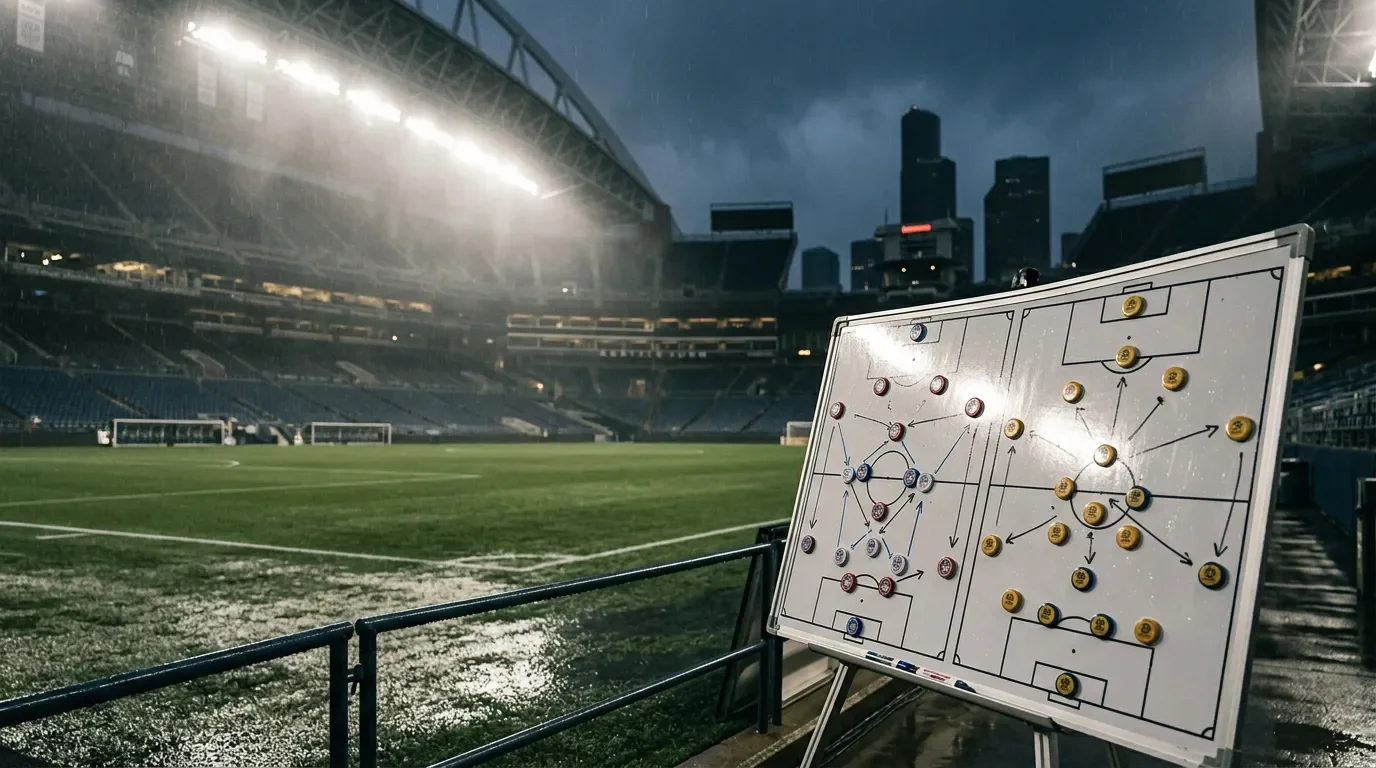
USA-Australia matchday brief: the checks before kickoff
A matchday guide to USA vs. Australia that moves past the Pulisic uncertainty and focuses on the five checks that will decide the game: left-side shape, transition control, Beach's box, striker usage, and Group D math.

The temptation is to make USA-Australia a one-name match: Christian Pulisic. That is understandable, because Mauricio Pochettino has left his captain's status open until the medical staff gives a final answer. It is also too narrow. Australia just won a game with 28.3% possession, eight saves from Patrick Beach, and enough counterattacking threat to turn a possession edge into a trap. 1
For the U.S., this is a match about control without impatience. Win it, and the Americans are into the knockouts. Win it while Türkiye fail to beat Paraguay, and first place in Group D can be settled before the final group match. 2
Match card
| Item | Current read |
|---|---|
| Kickoff | Friday, June 19, 3 p.m. ET, Seattle Stadium; TV on FOX and Telemundo. 3 |
| Table | USA and Australia both have three points; the U.S. leads Group D on goal difference, +3 to +2. 4 |
| U.S. availability | Pochettino said Pulisic is "much better" but still needed a final medical assessment before the Australia match. 5 |
| Australia profile | Tony Popovic's team opened with a 2-0 win over Türkiye after goals from Nestory Irankunda and Connor Metcalfe. 6 |

The five checks before kickoff
| Check | Why it matters | What to watch |
|---|---|---|
| Pulisic decision | Pochettino said the staff would decide after a medical meeting; if Pulisic is unavailable, ESPN listed Brenden Aaronson, Gio Reyna, Tim Weah and Alex Zendejas among the replacement options. 5 | If he starts, watch the first two recovery sprints. If he sits, watch whether the U.S. uses Weah's depth, Reyna's interior passing, or Aaronson's pressure. |
| First pass after a turnover | Australia beat Türkiye despite holding the lowest possession share of any team in the tournament to that point, 28.3%. 1 | The U.S. cannot let its fullbacks and midfielders arrive in the box at the same time without cover behind them. |
| Beach and the box | U.S. Soccer credited Patrick Beach with eight saves against Türkiye, a World Cup record for an Australian goalkeeper and the most by any goalkeeper on his World Cup debut since 2002. 6 | If Beach is seeing clean shots, Australia can live with U.S. volume. The better question is whether Balogun and Tillman can force second balls. |
| Striker leverage | Balogun scored twice against Paraguay; U.S. Soccer also notes Haji Wright scored both U.S. goals in the October 2025 comeback win over Australia. 7 | Balogun should start as the form striker. Wright is the bench lever if Australia are still defending deep after the hour. |
| Group D consequence | A U.S. win clinches advancement; a U.S. win plus Türkiye failing to beat Paraguay wins the group. 2 | Scoreboard pressure matters. If Türkiye lead early, the U.S. still need the win, but the first-place celebration waits. |
1. Do not let Pulisic turn into a shape problem
Pulisic's availability is unresolved, but the U.S. cannot spend the first half playing as if the decision itself is the plan. ESPN reported that Pulisic entered Thursday practice with his left calf wrapped, joined the pre-warmup huddle, then went to the gym instead of training with teammates. 5
If he starts, the U.S. need to protect him from a game that becomes all repeated recovery runs. That means cleaner possession losses, earlier counter-pressure from the near-side midfielder, and fewer hopeful diagonals that leave the left back exposed. If he does not start, the replacement choice should say exactly what Pochettino wants: Weah for depth, Reyna for interior combinations, Aaronson for harassment, or Zendejas for a more direct wide threat.
2. Make Australia defend twice
Australia's Türkiye win is a warning against lazy possession metrics. The Socceroos were outshot 30-9 but won 2-0, and U.S. Soccer described them as organized, defensively sound and opportunistic in transition. 1
That puts pressure on Tillman and McKennie as much as on the wingers. The first pass can move Australia. The second action has to hurt them: a cutback, a crash from midfield, or a quick recycle that makes the back line shift again. If the U.S. take the first half-hour as a shooting gallery from safe areas, Beach gets rhythm and Australia get the exact game they just won.
3. Keep enough players behind the attack
Irankunda and Metcalfe both scored in Australia's opener, and Irankunda became the Socceroos' youngest World Cup scorer. 6 That matters because the U.S. fullbacks will be tempted to pin Australia deep from the opening whistle.
The safer version is not passive. It is staged aggression. One fullback can go high, but the far-side fullback and Adams have to be ready for the first clearance. Center backs should be thinking about the pass after the clearance, not just the duel itself. Australia do not need long spells. They need one clean outlet and a U.S. rest defense that is half a step late.
4. Use the striker group, not just the starter
Balogun has earned the first look after the Paraguay brace. U.S. Soccer wrote that his two goals made him the first player to record his first USMNT brace in a World Cup match, and only the second American with multiple goals in a World Cup game after Bert Patenaude in 1930. 3
The bench still matters. Wright's October brace against Australia came in a game he remembered as difficult to break down, with the U.S. needing to wait for chances and take them when they arrived. 7
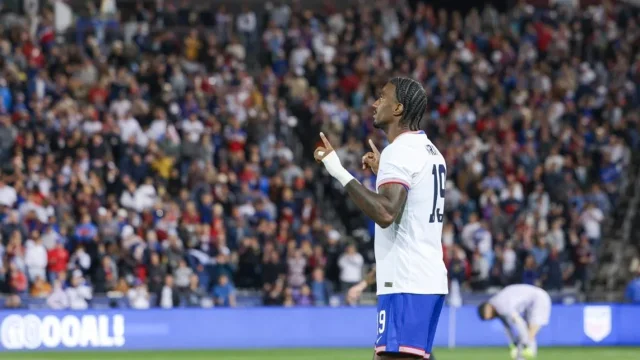
If Australia are still compact late, Wright is not just a sentimental repeat angle. He is a different box profile, especially if the U.S. are sending crosses and second balls into traffic.
5. Know what the result changes
The table gives the U.S. room, but not comfort. First and second in Group D both advance, while third place remains possible only through the expanded tournament's best-third-place route. 4
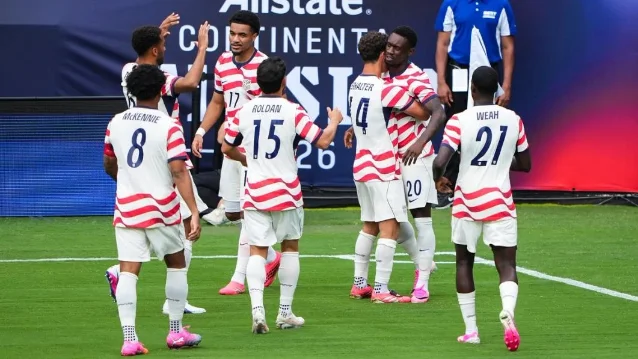
CBS mapped the difference in paths: first in Group D would play a third-place team in Santa Clara on July 1, while second would go to the Dallas area on July 3 against the Group G runner-up. 2 That is not a reason to force the game open by the 20th minute. It is a reason to stay exact. The U.S. can make this a qualification day, but only if they handle the boring parts better than Australia handle the dangerous ones.
References
- 1USMNT Growth, Player Availability Ahead of Australia Meeting
- 2USMNT scenarios: How USA soccer can advance at 2026 World Cup
- 3USMNT Set for World Cup Showdown with Australia
- 4Group D Standings Tracker: USMNT, Australia With Three Points Each
- 5USMNT's Christian Pulisic 'much better,' still in doubt vs. Australia
- 6USMNT vs. Australia: Opponent Profile, Recent Form & History
- 7USMNT's Haji Wright Recalls Brace Last Time Out vs. Australia
Add more perspectives or context around this Post.